What is EMF ACE ?
An awards weekend in Abu Dhabi, branded end to end, from a desk 2,000 km away.
The problem of a thousand pieces and twelve approvers.
How do two designers make a thousand pieces look like one weekend?
EMF hired Media Mushroom to brand their ACE awards weekend end to end — environmental branding, social, YouTube ads, award designs, attendee packages, welcome letters, the magazine. Three months, two designers, over a thousand individual creatives.
Who decides?
Twelve decision-makers with equal authority, and a brief that expanded every week.
When is it due?
Every deadline arrived last-minute. A piece made in an hour at 11pm had to stand next to one that took two days.
Where does it go?
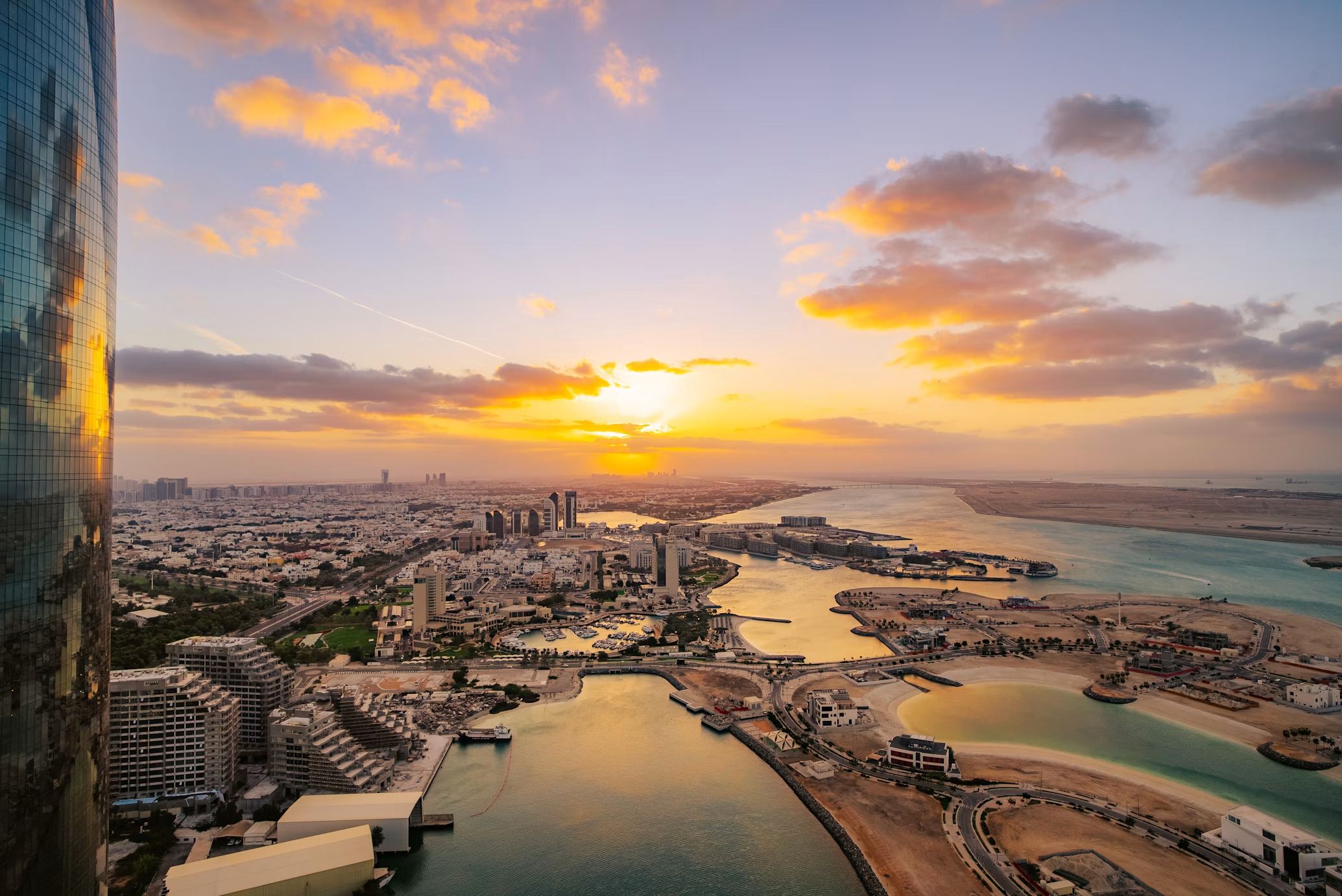
Three venues — the Ritz-Carlton, Emirates Palace and Ferrari World — that nobody on the team had ever stood in.
“The hard part was never any one design. It was the volume.”
Looking back at the brief
How did EMF ACE solve this?
Build a system that absorbs the chaos.
No individual piece could be defended on its own merits, so the work went into the system instead.
What I did
Design Lead at Media Mushroom, one of two designers on it, over three months in 2024. The identity system and the environmental, social, film, award and print design — every digital and print asset made in-house, with production and install delivered by a partner team on the ground overseas.
So how does one lockup hold a thousand pieces together?
Let me walk you
through how it held.
Which weekend is this?
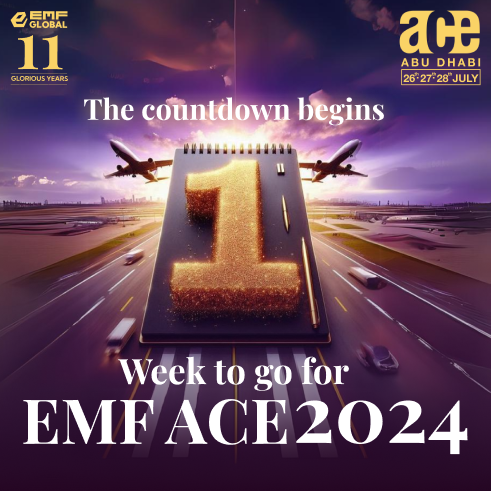

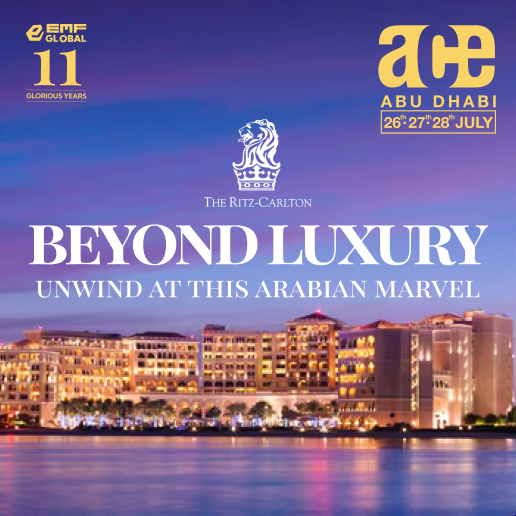
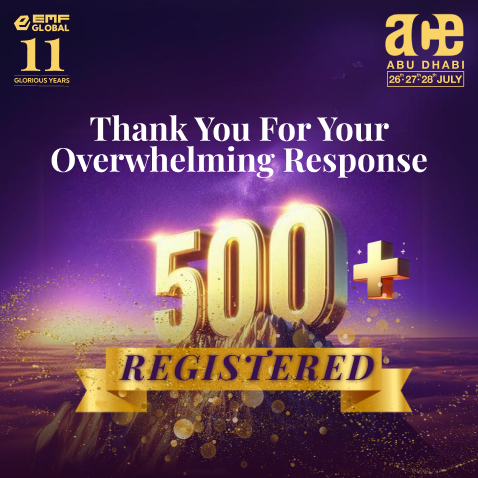
How fast does it have to read?
Almost all of it was seen in a feed — thumbed past, at speed, between other people’s posts. That is the real test of a lockup: it has about a second to say which weekend this belongs to.

The creatives as a feed
What never moves?
- Wordmarkace
- Mark11 Glorious Years
- Dates26 · 27 · 28 July
The lockup, on every one of the 1000+
Three elements that never moved, on any of the thousand-plus. One palette and one light — violet, gold and a desert horizon. Every brief resolved into those.
The test was simple. A piece made in an hour at 11pm had to look like it belonged to the same weekend as one that took two days — without anyone holding its hand.
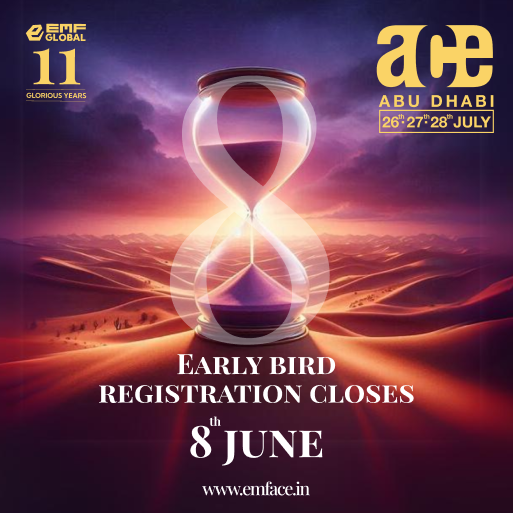
The same corner of four different pieces — the lockup never moves
Who drew the desert?
The desert scenes are generative. This was 2024 and the first wave of usable image generation, and I used it as a production tool on the backgrounds while the lockup, the type, the composition and the art direction stayed hand-made.
Worth naming rather than leaving for someone to notice: the system had to hold a rule over imagery I hadn’t drawn, which is exactly the test it was built for.
Backgrounds
Generated — the desert scenes.
Lockup
Hand-set, and never moved.
Type
Hand-set.
Composition
Art-directed piece by piece.
The only part a machine made

Teaser — one image, four words
Who caught the wrong dates?
The first desert teaser went out for approval carrying the wrong dates — 20–21 July, against an event running 26, 27 and 28. Twelve approvers had signed it off.
It was the lockup rule that caught it. The dates live in a fixed element, so the moment they disagreed with the master they were visibly wrong rather than quietly wrong.
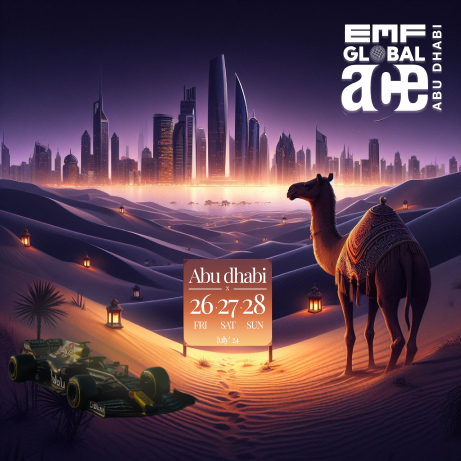
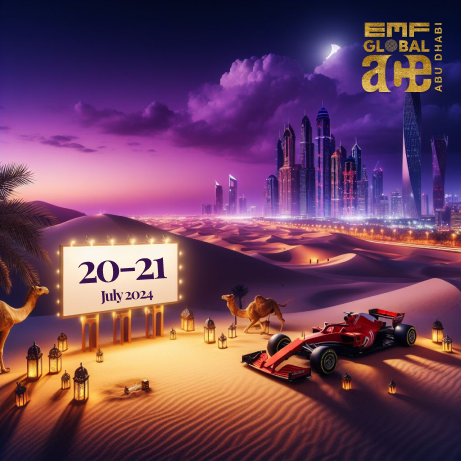
Drag, or use the arrow keys
That’s the feed.
But the weekend happened in three rooms nobody had stood in.
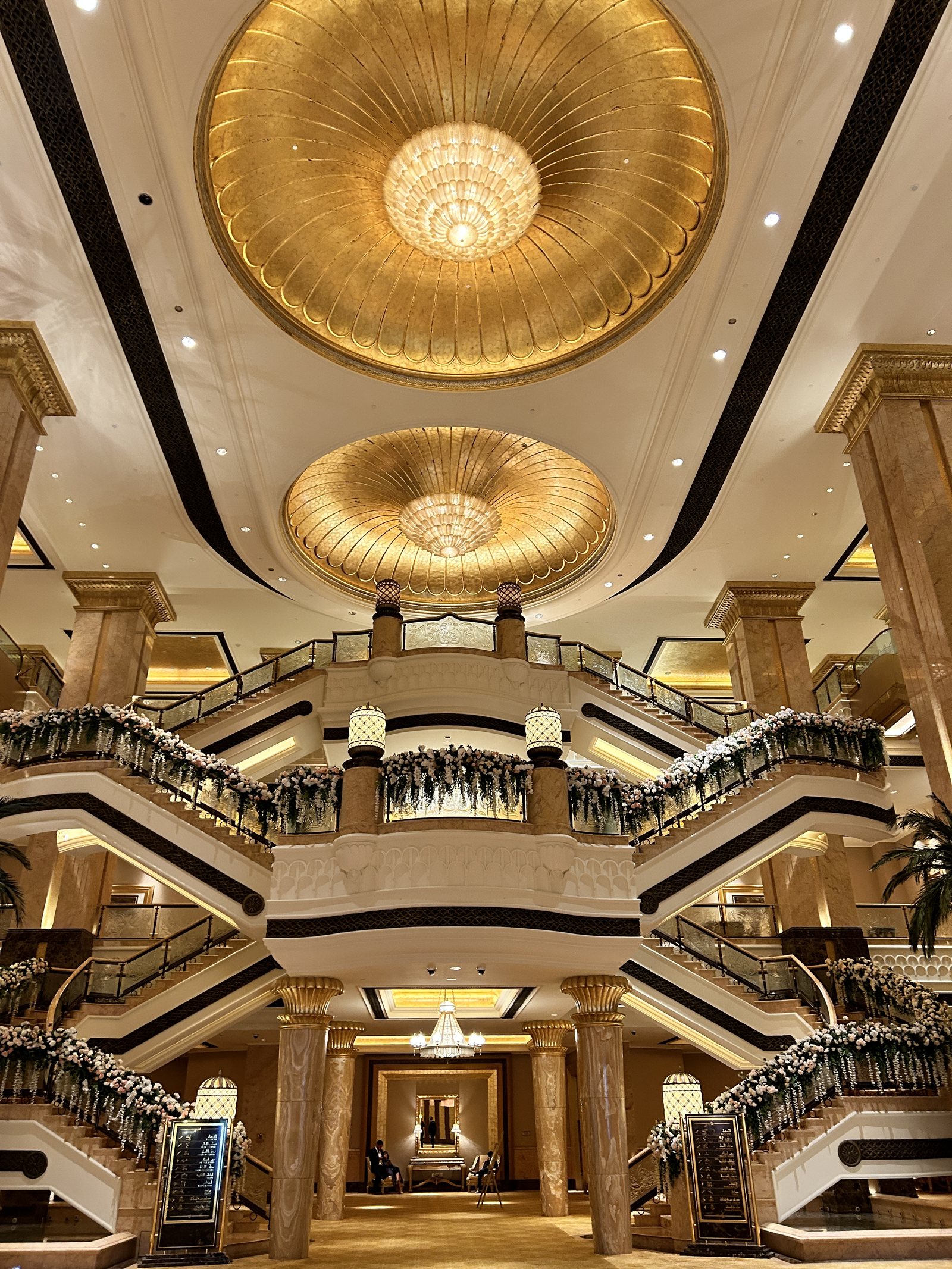
The Ritz-Carlton, Emirates Palace and Ferrari World. Nobody on the team had ever been inside them, and all three were designed from measurements, floor plans and photographs, from a desk in India. Stage widths, sightlines, ceiling heights — where a print would be read from twelve metres and where from one.
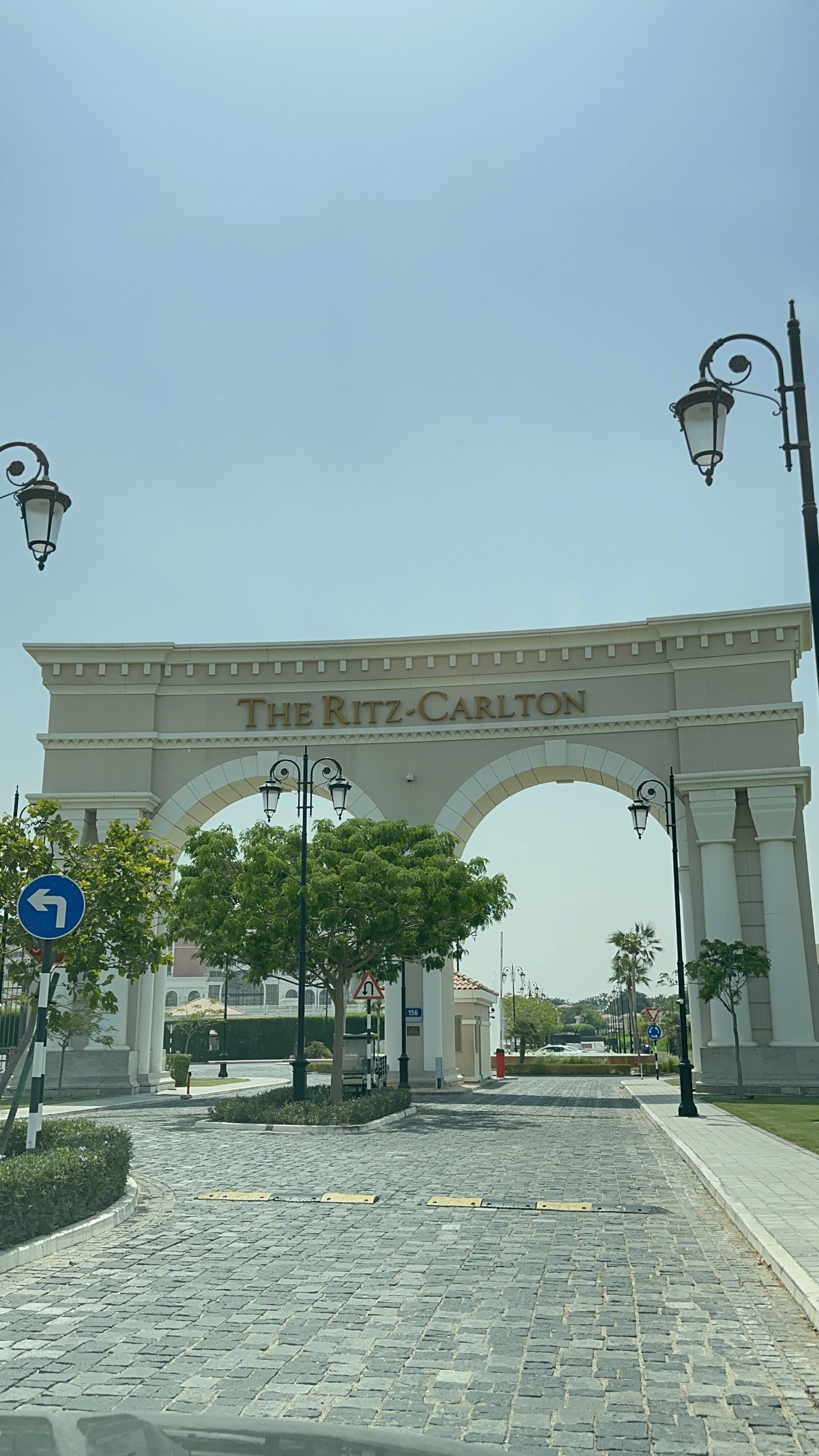
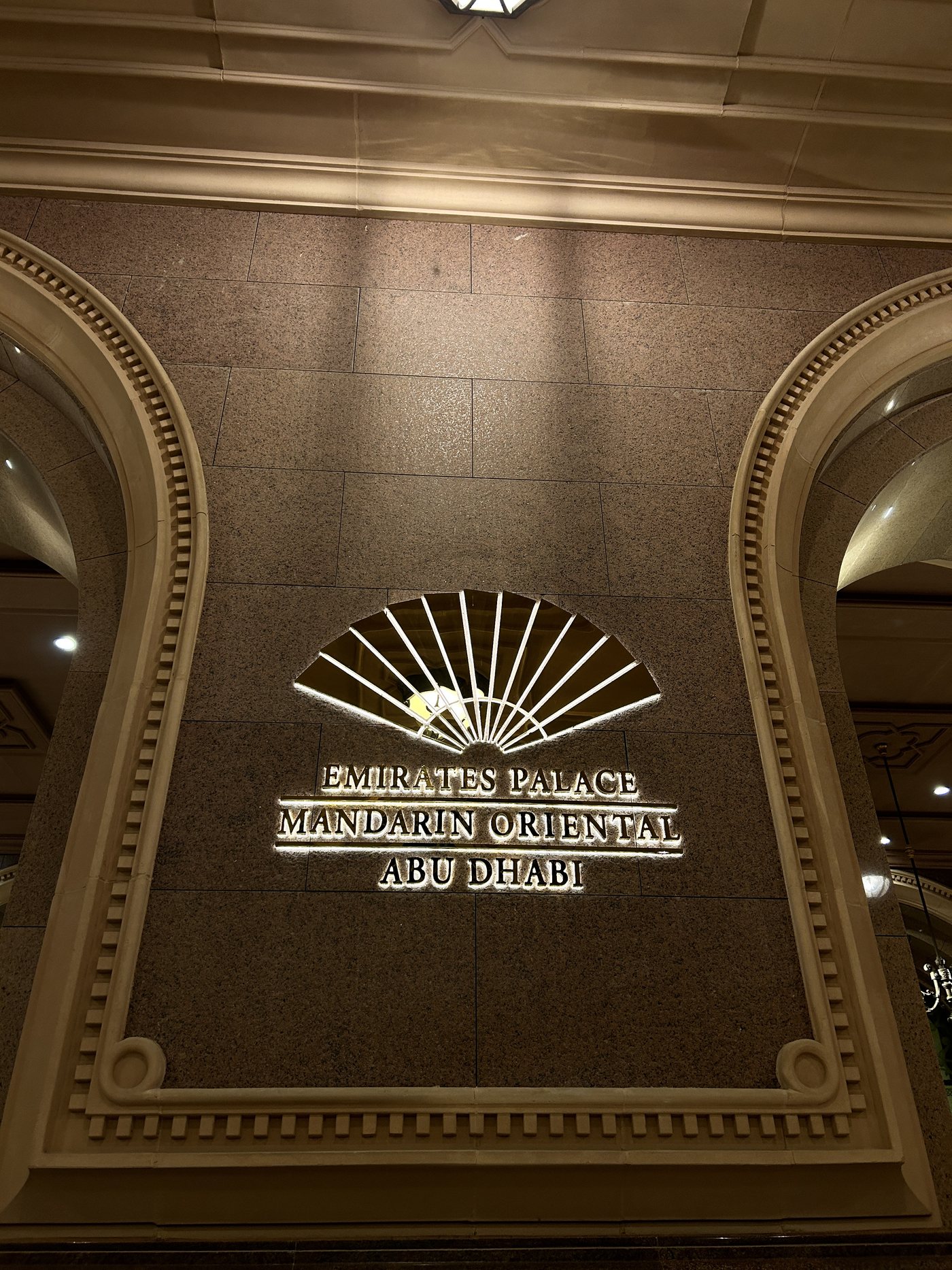
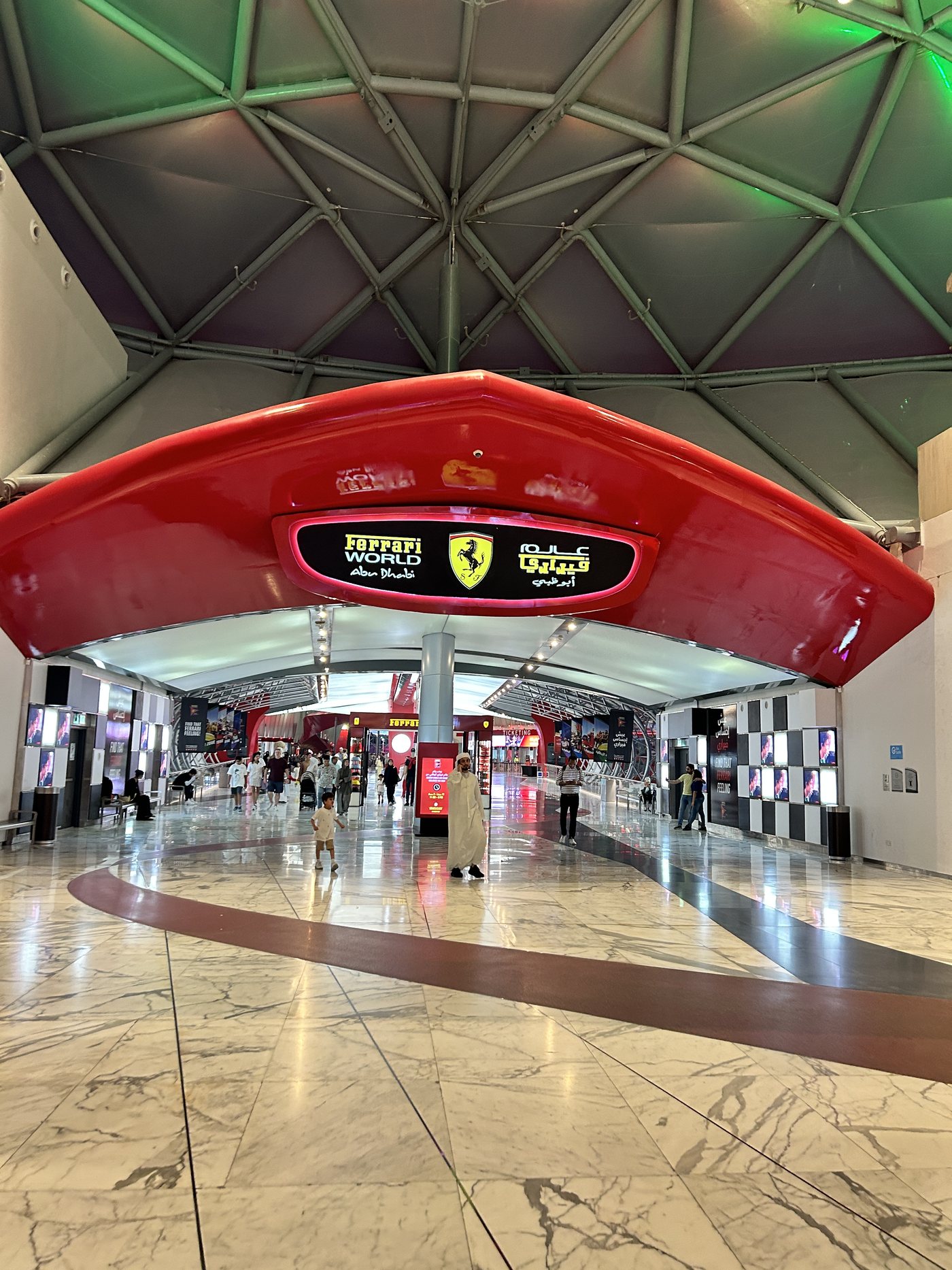
Sight unseen
I had one day on the ground before the weekend opened. Everything either fitted or it didn’t.
A system is also what catches your mistakes. Here is the wrong-dates teaser twice — once through the approvals, once through the rule.
Through twelve approvals
- Draft dated 20–21 July
- Twelve approvers
- Signed off
- Still wrong
Missed. Twelve sign-offs, and the dates were still wrong.
Through the lockup
- Draft dated 20–21 July
- Dates sit in the fixed element
- Disagree with the master
- Corrected
Caught. Visibly wrong, rather than quietly wrong.
Where the mistake shows
Behind the scenes
Production and install were delivered with a partner team on the ground. The digital and print assets in the venues were all made in-house, by two designers.
What went over
It shipped, across three venues, on time — to a room of 500–800 people.
The weekend generated in the order of ₹1–2 crore for the client. Both figures are theirs, not mine, and I’m reporting them as given rather than as something design can take credit for on its own.
What I’d do differently
I ran it the way I’d run any project — piece by piece, approval by approval — and the workload compounded faster than the process could carry.
A job that scales this fast, with this many people holding a veto, needs its governance designed on day one alongside the identity. That’s the lesson I actually took from it.